Adobe Illustrator in 3D

Let’s tap into some of the 3D features of Adobe Illustrator. Though Illustrator doesn’t offer a 3D environment like a true 3D application, it does give you the ability to create 3D objects that can be modified within a 3D space. Texture mapping and light sources similar to those found in the high-end 3D applications are also available.

[If you’d like to download the image used in this tutorial to practice these techniques, click here. All files are for personal use only.]

1 CREATE A LABEL
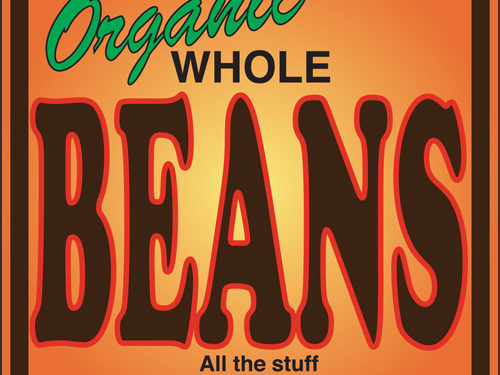
The first thing we’ll do is create the label that will wrap around our can. Create a label like the one here, or you can download the source file (above). In this example, we’re going to create a tin can full of beans, but you can fill your can with whatever you want. You can even import an Adobe Photoshop file for your label, if you wish.

2 MAKE A SYMBOL
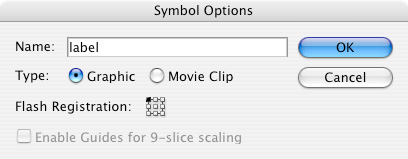
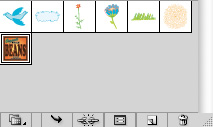
Once your label art is complete, select all the elements by pressing Command-A (PC: Ctrl-A). Using the Selection tool (V), click-and-drag the selected label into the Symbols panel (Window>Symbols). In the Symbol Options dialog that pops up, name your symbol, set Type to Graphic, then click OK. Press Delete (PC: Backspace) to delete the label from the artboard.


3 DRAW THE CAN
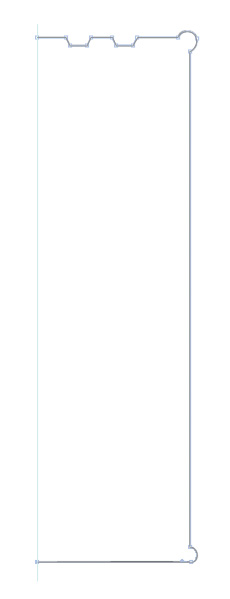
Now let the fun begin. Create a vertical line with the Pen tool (P) by clicking once on the artboard and then Shift-clicking below it to keep it perpendicular. Next, make it a guide by choosing View>Guides>Make Guides. Now set the Stroke to a medium-to-dark gray and the Fill to None (/) in the Toolbox or Control panel. Then draw a path similar to the one you see here (or download this file from the website). Make sure the path begins and ends on the guide. Believe it or not, this is the right side of the tin can. You’ll notice that I’ve created rounded corners. I did this to give my can a lip.

4 GIVE THE CAN SHAPE
With your can selected, go to Effect>3D>Revolve. In the 3D Revolve Options dialog that pops up, check Preview to see the 3D effect. At first it will look a little off. Dialing up the Perspective setting will make the can look more realistic (30˚ in this example). Click the More Options button to reveal the controls for lighting the object. I’ve added a second light source by clicking the New Light icon and then dragged the two light sources into place. With both light sources set, play with the other Surface settings to taste. I’ve bumped up the Highlight Intensity, as highlights would be stronger on a real tin can. (Don’t click OK yet.)


5 AFFIX THE LABEL
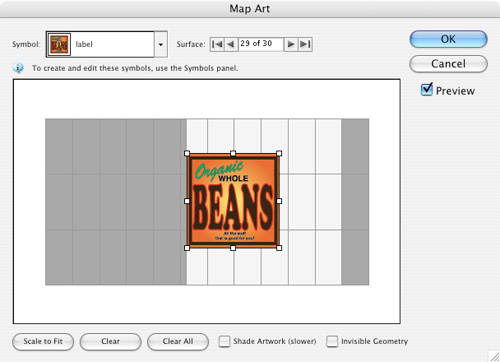
Now we’re ready to apply the label. Click the Map Art button to open the Map Art dialog. At the top of the dialog there’s a Surface indicator. As you cycle through the various surfaces by clicking the Surface arrows, the currently selected surface will be displayed over the object in red. Click the arrows until the body of the can is outlined in red. Then find your label in the Symbol drop-down menu in the upper-left corner of the dialog.


6 POSITION THE LABEL
Drag your label over the white surface shown in the box. The white area signifies the area that is currently in view, whereas the dark areas are the areas behind the object that are hidden from view. You can also grab the handles on the sides of the label to resize and alter its shape. Check Shade Artwork to add the highlights and shadows that appear on the can to your label. You can now click OK in this dialog and the one below because your tin can is finished.

7 ADD A LITTLE SHADOW
To make the can look like it’s standing within 3D space, add a little shadow behind it like the one shown here. To do this, click the Create New Layer icon at the bottom of the Layers panel for your shadow and then click-and-drag it below your can layer. Next, create a shape like the one shown here with the Pen tool and fill it with black.

8 SOFTEN THE SHADOW
Lower the Opacity for the shadow to make it more realistic (Window>Transparency). If at any point you want to edit your can or label, go into the Appearance panel (Window>Appearance) and double-click 3D Revolved (Mapped). You have now completed your 3D tin can!

Visitor Comments »


I have a tutorial for making a wine bottle with a cup in Illustrator.

http://desfaziendoentuertos.prepress.es/2008/06/dibujos-en-3d-con-adobe-illustrator.html

(in spanish)


Comment by Alfonso de Tomás | November 5, 2008 @ 3:40 am


[...] Continue Reading Bert’s Tutorial Here [...]


Pingback by Hosting Scott Kelby’s Blog | Bert Monroy & Illustrator | Layers TV Winner | Layers Magazine | November 5, 2008 @ 4:14 am


very cool


Comment by didi | November 11, 2008 @ 1:51 pm


Good Tutorials


Comment by Peggy Gary | November 15, 2008 @ 12:49 pm


thanks


Comment by rana | December 31, 2008 @ 11:31 am


I don’t find most of the options that are in the example screen, I do only have a few of them, so my question is that —–Is this excercise compatible with Illustrator CS2?


Comment by Ricardo | January 11, 2009 @ 8:44 pm


sorry now I find them


Comment by Ricardo | January 11, 2009 @ 8:46 pm


My symbol doesn’t show on the can, the only way I can see it is if I click on “invisible geometry”, then I can only see the symbol and no rendered can. What am I doing wrong?


Comment by T. | February 5, 2009 @ 8:24 pm


Wonderful and extremely helpful!
thank you!


Comment by Lisette Buiani | March 3, 2009 @ 11:48 am


Thanks so much.
(Got me out of a jam at work)


Comment by dalila smith | April 9, 2009 @ 12:37 pm


How do you import a photoshop file to the symbols dialog box? and what file format should it be?
thanks!


Comment by Lisette Buiani | April 14, 2009 @ 9:15 am


[...] Create 3D Can of Beans [...]


Pingback by 50 Great Illustrator Tutorials and Tips « Vandhematharam | May 12, 2009 @ 2:22 pm


[...] Adobe Illustrator in 3-D Create a 3D can and label in Illustrator. [...]


Pingback by 50 Excellent 3D Adobe Illustrator Tutorials | Tutorials | Smashing Magazine | June 16, 2009 @ 11:43 am


[...] Adobe Illustrator in 3-D Create a 3D can and label in Illustrator. [...]


Pingback by 50 Excellent 3D Adobe Illustrator Tutorials | Tutorials | Smashing Magazine | June 16, 2009 @ 11:43 am


[...] Adobe Illustrator in 3-D Create a 3D can and label in Illustrator. [...]


Pingback by 50 Excellent 3D Adobe Illustrator Tutorials | Search Engine Optimisation | June 17, 2009 @ 9:18 am


[...] Layers Magazine zeigt in einem kurzen, aber sehr guten englischen Tutorial wie man in Illustrator ein Etikett erstellt. In der Folge wird eine Dose in 3D erzeugt und das [...]


Pingback by 5 Tutorials für 3D-Effekt in Adobe Illustrator | Guru 2.0 | June 17, 2009 @ 10:33 am


[...] Adobe Illustrator in 3-D Create a 3D can and label in Illustrator. [...]


Pingback by 50 Excellent 3D Adobe Illustrator Tutorials | Graphics of the World | June 17, 2009 @ 4:19 pm


[...] Adobe Illustrator in 3D [...]
 

Pingback by Amazing Illustrator Vector Tutorials Collection | Flash, Design, Vector, Photoshop, Adobe Tutorials | GraphicMania.net | July 13, 2009 @ 5:13 am


[...] Create 3D Can of Beans [...]


Pingback by 50 Great Illustrator Tutorials and Tips - System Web Design | July 18, 2009 @ 9:20 am


i visit first time at your site

its very amazing

i learn illustrator tutorial

i love to learn adobe Photoshop & Illustrator

i like layers very much


Comment by mohammad Arif | July 28, 2009 @ 3:56 pm


[...] 1.3 Adobe Illustrator in 3D [...]


Pingback by 60 Incredible Adobe Illustrator Graphics Tutorials | August 16, 2009 @ 2:31 pm


[...] Adobe Illustrator in 3D [...]


Pingback by I migliori 5 tutorial di Novembre | § Mondo Grafica | August 23, 2009 @ 4:39 pm


[...] Adobe Illustrator in 3-D Create a 3D can and label in Illustrator. [...]


Pingback by AMB Album » 50 Excellent 3D Adobe Illustrator Tutorials | August 30, 2009 @ 2:52 pm


This is very cool, do you have any tutorials on importing an Autocad 3D file?


Comment by Marilyn Glisci | October 14, 2009 @ 12:06 pm

Leave us a comment

Comments RSS | TrackBack URI

Back to Top


Advertisement
Creative Suite Tutorials
  1. Photoshop Photoshop
  2. Illustrator Illustrator
  3. Indesign Indesign
  4. Dreamweaver Dreamweaver
  5. Fireworks Fireworks
  6. Premiere Premiere
  7. Flash Flash
  8. After Effects After Effects
  9. Lightroom Lightroom
  10. Acrobat Acrobat

Get the latest tips, tricks and news delivered straight to your inbox.

From our Partners
Subscribe to Layers Magazine


  • Back to the Layers Magazine Homepage
  • Creative Suite Tutorials
  • Layers Magazine
  • Reviews on top products
  • Layers Magazine Reader Forums
  • Subscribe to Layers Magazine